
Last Updated on 21. July 2026 by Andi
What Is Humility, Really?
Type “becoming proud” into Google: almost 175,000 results. Then try “becoming humble”: barely 8,000. That says a lot about what our society considers worth striving for and what it doesn’t.
And yet humility is one of the most fascinating and most misunderstood virtues there is. C. S. Lewis describes the truly humble person like this:
“Do not imagine that if you meet a really humble man he will be what most people call ‘humble’ nowadays: he will not be a sort of greasy, smarmy person, who is always telling you that, of course, he is nobody. Probably all you will think about him is that he seemed a cheerful, intelligent chap who took a real interest in what you said to him.”
C. S. Lewis (from: Rikereads.com)
That’s exactly the kind of humble I want to be. And that’s exactly why I read the book Humility – The Forgotten Virtue by Wayne A. Mack.
A fisherman is proud of his catch, and that’s perfectly fine. I am discussing “pride” in its negative sense.
Humility, on the other hand, means something active, even courageous. The German word for humility (“Demut”) shows us what the real meaning is. A Bible dictionary puts it this way:
The German word »Demut« is a compound of »dio«, servant, and »muot«, disposition, and denotes the mindset of a servant or the courage to serve. Humility does not mean passive submission, but an active, courageous act. The arrogant person thinks more highly of himself than he truly is.
Lexikon zur Bibel (SCM R. Brockhaus, 2021)
Humility does not mean making yourself smaller than you are, but the consistent acknowledgment of one’s own lowliness – that is, the position one holds before God (for Jesus: the humanity he took on). Humility is a kind of honesty, a standing in the truth. The one who does not recognize and accept his lowliness cannot have God as his everything: »He gives grace to the humble« (1 Pet 5:5; Jas 4:6; cf. Job 22:29; Isa 57:15).
Humility is not a sign of weakness – it is a standing in the truth. The humble person doesn’t think less of himself than he is, but realistically – in relation to God.
Pride: The Opposite
Let’s take a look at the opposite of humility. Spurgeon put it in very stark terms:
“This demon of pride was born with us, and it will not die one hour before us. It is so woven into the very warp and woof of our nature, that, until we are wrapped in our shrouds, we shall never hear the last of it.”
Spurgeon, quoted in Humility – The Forgotten Virtue by Wayne A. Mack, p. 11
And C. S. Lewis writes:
“There is no fault which makes a man more unpopular, and no fault which we are more unconscious of in ourselves. And the more we have it ourselves, the more we dislike it in others.”
C. S. Lewis, quoted in Humility – The Forgotten Virtue by Wayne A. Mack, p. 54
Pride leads to a fall – think of political despots throughout history. It clouds judgment, breeds ingratitude, and closes the heart to God and to others. Mack calls it the root of all sin. No wonder Scripture says:
“God opposes the proud but gives grace to the humble.”
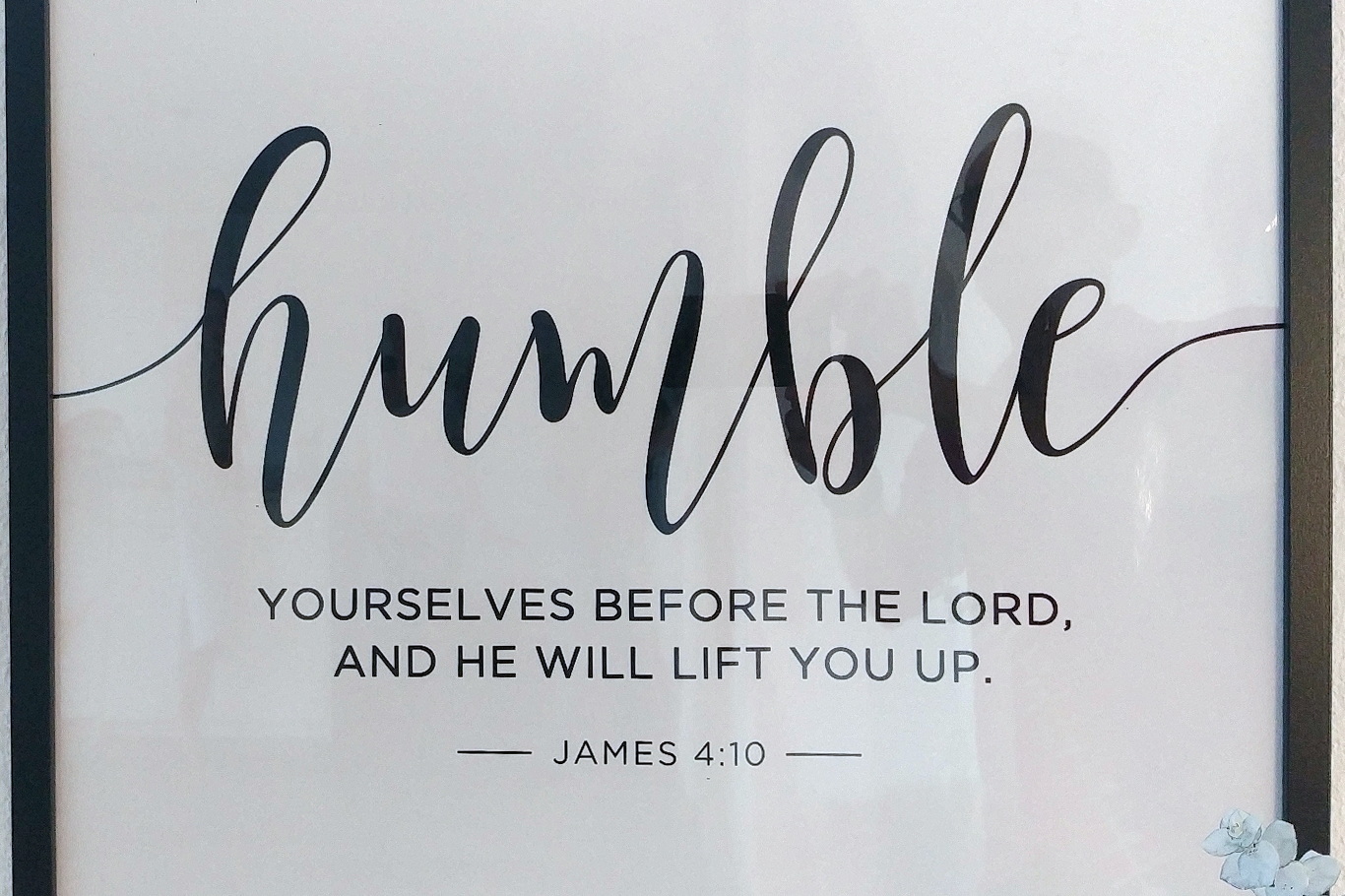
The Bible, James 4:6 and 1 Peter 5:5
I don’t want to fall into that trap. When it comes to pride, I’m a lot like Lewis: I spot it in others quickly – in myself, it’s much harder.
What Humility Really Looks Like – Toward God and Others
Wayne Mack describes humility as a foundational attitude:
“Humility, then, is a basic attitude in which we recognize our personal insignificance and unworthiness before God and ascribe to Him the highest honor, praise, prerogatives, rights, privileges, worship, devotion, power, submission, and obedience that He alone deserves.”
Wayne A. Mack, page 21
That sounds radical – which is why I emphasized “before God.” I don’t want to be seen as insignificant in the eyes of other people, and I don’t think that’s what’s meant here either. It’s about an inner posture: acknowledging God as the source, foundation, and goal of all things.
Toward other people, humility shows up in practical ways: no boasting, no condescension, a willingness to receive criticism. John the Baptist is a beautiful example – when asked who he was, he answered: “I am not the Christ.” He redirected attention away from himself and toward Jesus.
Truly humble people – like Bonhoeffer or Mother Teresa – are not characterized by submissiveness, but by inner strength. They kneel before God and stand upright before others.
The Valley of Humility
Because God values humility so highly, He sometimes lovingly leads us there – through painful experiences. Drawing on John Bunyan’s Pilgrim’s Progress, Wayne Mack calls this the “Valley of Humility”:
“The Valley of Humility represents the humbling experiences God allows in our lives to root out the sin of pride and help us develop godly humility.”
Wayne A. Mack, p. 15
That’s a comfort whenever I find myself in such a valley. Biblical figures like Abraham, Joseph, Moses, and David knew it too. God works there. Not to break us, but to shape us.
How Do I Become Humble – And What Can I Do About It?
This is where it gets personal. No one can develop humility on their own. The foundation is a new heart – one that God gives when we believe. We don’t need renovation; we need renewal.
But we can play a part. Mack suggests concrete steps, and I add a few thoughts of my own:
Reflect on the greatness of God – read the Bible, look at His creation with wonder. Keep Jesus as your model: He humbled Himself and remained completely steadfast. That is true humility. Practice realistic self-assessment without despair – with God, forgiveness and renewal are always possible. Spend time with humble people, because they shape us. And perhaps the most honest tip from Mack:
“Think about how little you can stand pride in other people.”
Wayne A. Mack
Have you noticed that too?
A Journey, Not a Destination
Humility is not something you achieve once and then check off the list. It’s a journey – a daily process of learning again and again to see ourselves clearly, to trust God, and to treat others with respect.
Reading this book, I was struck by how much pride is still lurking in me. Maybe you felt the same while reading this? Then you’re in good company – and on the right path to making humility a virtue in your life.
Because humility doesn’t begin with performance. It begins with an honest look upward – to God – and inward – to our own hearts.
Humility is not for heroes. It makes people into heroes. What do you think about it? Write me or comment this article, I will surely answer.
Link to the book: Wayne A. Mack – Humility: The Forgotten Virtue (Amazon)
Claude helped me shorten this article (originally twice as long).
Bildquellen / Image Sources
- Humility: unbekannt
