
Last Updated on 11. February 2026 by Andi
Is the Bible Scientifically Wrong? Rabbits, Hyraxes – Leviticus 11:5 Explained
Is the Bible biologically outdated? Bible critics often cite Leviticus 11:5, where the coney is allegedly mistakenly called a ruminant. What does the original text actually say? And what is this supposed “error” really about? The hyrax provides clarity.
- What does the King James Bible say?
- What does the Hebrew text actually say?
- What is a hyrax?
- Are hyraxes ruminants?
- Is this a mistake in the Bible?
- Back to the rabbit
- Answers to criticism: FAQ
- Sources & Further Reading
What does the King James Bible say?
The King James Bible translates this passage as follows:
And the coney, because he cheweth the cud, but divideth not the hoof; he is unclean unto you.
Leviticus 11:5
What does the Hebrew text actually say?
The original Hebrew text of the Bible does not mention a coney at all. The Hebrew word is shafan (שפן), which today is usually translated as hyrax or rock hyrax. Older Bible translations like King James or Luther in German still used “coney”, “rabbit” or “hare,” which led to misunderstandings.
What is a hyrax?
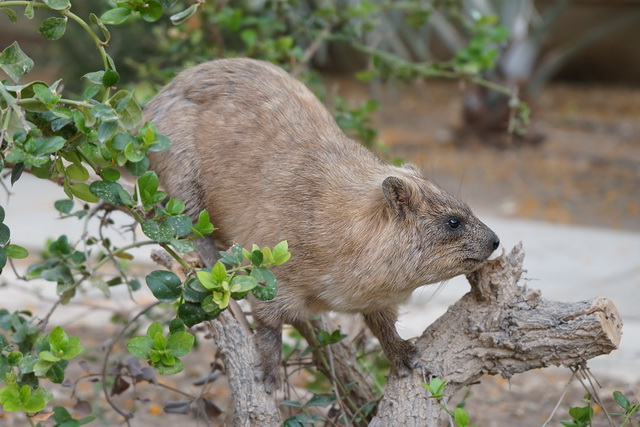
The hyrax (Procavia capensis) is a small, rabbit-like mammal that lives in rocky areas and is native to Israel. You can see it in the featured image of this post. Despite its appearance, it is biologically not a coney but belongs to its own order, closely related to elephants and manatees.
Are hyraxes ruminants?
Biologically speaking: No, not in the classic sense like cows or sheep. But the hyrax shows a striking behavior: it frequently re-chews its food, which was once interpreted as rumination.
In Grzimek’s Animal Life, we can even read in a list of the characteristics of the hyrax that it is a ruminant.
The Bible, however, does not actually say “chews the cud,” but more accurately translated, it should say: “brings up chewed food,” and that is exactly what the hyrax does. It brings up chewed and already swallowed food and chews it again so that it can better utilize the plant-based diet.
Is this a mistake in the Bible?
No, it is a typical example of a misinterpretation measured by modern standards. The Bible describes exactly what can be observed: The hyrax brings up already swallowed food and chews it again. “Bringing up chewed food” describes exactly what the hyrax does.
The terms “clean animals” in Leviticus 11 follow a ritual classification, not a zoological one.
Back to the rabbit
But we also want to do justice to the coney, because coneys and hares are also “ruminants,” though in a different way than cattle: They eat their feces to digest it again. This allows the food to be better absorbed.
Answers to criticism: FAQ
- Why does the Bible say that coneys are ruminants?
Older Bible translations (such as King James or Luther) were based on limited zoological knowledge. The Hebrew shafan is correctly translated as hyrax. This animal brings up chewed and already swallowed food and chews it again. It is therefore a ruminant. - Is this proof of errors in the Bible?
No. In the correct translation, the text accurately describes the hyrax as a ruminant.
Sources & Further Reading
- Grzimek’s Animal Life (1979), Volume 13, p. 516 (in German language)
- Wikipedia: Hyrax
- Bibleserver: Leviticus 11
Did this article make you think? Then read on: Overview of my articles Explore the Bible, especially Is the Bible credible? Or leave your question in the comments!
